-

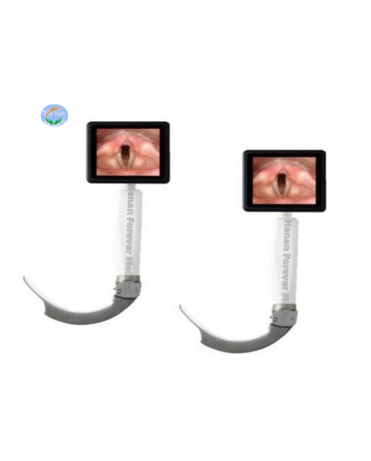
Advantages of video laryngoscope
1. Advantages of video laryngoscope There is no doubt that videolaryngoscopy has been one of the major advances in anesthesia practice in recent years. The main challenge is to determine to what extent videolaryngoscopy should be used in routine clinical practice and which videolaryngoscope will perform best. Going from a standard Macintosh laryngoscope to a video laryngoscope is like going from a standard mobile phone to a smartphone. There have been calls for videolaryngoscopy as a first-line tool for airway management. Most importantly, in the 2015 guidelines of the British Difficult Airway Association, the role of videolaryngoscopy in the management of difficult tracheal intubation has been recognized. The guideline recommends that all anesthesiologists should be trained in the use of videolaryngoscopes and have immediate access to videolaryngoscopes at any time. Furthermore, videolaryngoscopy has been recommended for endotracheal intubation in obese patients, who are known to be at higher risk of airway management-related complications. Beyond the field of anesthesia, it has been predicted that videolaryngoscopy will dominate the field of emergency airway management in the future. Price appears to be the main factor holding back the tide for now. The main reasons that make people enthusiastic about video laryngoscopy are as...
-
Summary of basic knowledge of ultrasound (part one)
Section I Method of operation Body position (1) Supine position: most commonly used. (2) Left lateral position: it is a necessary supplementary position. (3) Right lateral position: visualization of the left lateral lobe is particularly useful. (4) sitting or semi-reclining position. The probe location can be divided into four parts: right subcostal, subxiphoid, left subcostal and right intercostal two Maximum oblique diameter of the right lobe of the liver The oblique section of the liver under the right costal margin where the right hepatic vein and the middle hepatic vein drained into the inferior vena cava were used as the standard measurement section. Measurement location: The measurement points were placed at the liver capsule at the anterior and posterior edges of the right lobe of the liver, respectively, and the maximum vertical distance was measured. Normal reference value (cm) : 12-14cm for normal adults. Three. Anteroposterior diameter of the right lobe of the liver Measurement standard section: The largest section of the right lobe of the liver in the fifth or sixth intercostal space was the standard measurement section. Measurement location: The measurement points were placed at the liver capsule at the anterior and posterior edges of the right lobe of...
-
Omicron in China
Henan Forever Medical CO., LTD Recently many customers ask us whether #Omicron affects our life and family. Whether we need medicine or we can work normally etc. Let us explain in detail. Now almost everyone in China has been #infected by Omicron and most of them have #recovered now. More than 90% even do not need to the hospital and just rest for one week. So does my family. Our factory is operating as normal. But due to some suppliers can not work as usual. The #Leadtime may increase. China is open on Jan 8th,2023. It is time to schedule your #businesstravel to China after the Chinese #springfestival. Dance with us in 2023! KEY POINTS China announced Monday that starting Jan. 8, 2023, travelers will no longer need to quarantine upon arrival on the mainland. China said it would improve visa arrangements for foreigners to enter the country for resumption of work,business,study,visiting relatives and other gatherings Chinese citizens’ ability to travel overseas will be “resumed in an orderly manner,” the announcement said.
-
Clinical Significance of Platelet Count
Plateletcount is one of the important indicators for the screening of human hemostasis and coagulation dysfunction. The increase or decrease ofplatelet count is closely related to various bleeding and thromboticdiseases in addition to the individual’s own physiologica fluctuations. 1. Physiological changes The platelet count of normal people fluctuates with time and physiological state. Usually higher in the afternoon than in the morning, higher in winter than in spring, higher in plateau residents than in plains, higher after menstruation than before menstruation increases in the middle and late stages of pregnancy decreases afterdelivery, increases after exercise and a full meal, and recovers after rest. Plateletcount is slightly low in newborns, but increases significantly after two weeks, and can reach adult levels within half a year 2.Pathologicalincrease Thrombocytosis is defined as a platelet count exceeding 350×109/L which is common in: ① Primary hyperplasia: Myeloproliferative syndrome, essential thrombocythemia, chronic myelogenous leukemia, polycythemia vera, idiopathic myelofibrosis, etc. 2 Reactive hyperplasia: Acute and chronic inflammation, acute massive blood loss, acute hemolysis tumor, recent surgen (especially after splenectomy), iron-deficiency anemia, early stage of malignanttumor, etc., platelets may have reactive hyperplasia, milo increase or transient increase. Other diseases: Heart disease, liver cirrhosis, chronic pancreatitis, burns,renal failure,...
-
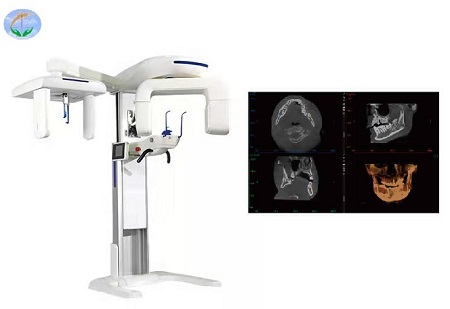
What is CBCT? Is it CT?
Oral problems may be something that none of us can avoid. Toothache is usually caused by dental pulp (dental nerve) infection caused by dental caries (tooth decay), gingivitis, periodontitis, pulpitis, or fractured teeth. When mild, only oral anti-inflammatory drugs or simple treatment; In severe cases, dental fillings, root canal treatment, etc. may be required. It is necessary to borrow a dental film machine to obtain a clear image of the crown and root to determine the location, scope and severity of local dental lesions; In severe cases, the tooth may need to be extracted and replanted, which requires oral CT, scientific name: CBCT. So, is CBCT CT? Yes and no! 1. Dental film machine—panoramic machine—CBCT X-ray imaging technology plays a very important role in the field of stomatology, initially as “pure dental radiology”, and then gradually evolved into “oral and maxillofacial medical imaging”. As a vertical field of X-ray imaging, the development of dental imaging has lasted for more than a hundred years, and has gone through stages such as dental film machine, film panoramic machine, digital dental film machine, digital panoramic machine, and CBCT. 01. Tooth film machine In 1896, German dentist Walkhoff took a picture of his own...
-
Advantages of CBCT?
Dental cone beam CT (cone beam CT), also known as digital volumetric tomography (digital volumetric tomography) is a new technology developed in the late 1990s. Because it can display normal tissue structure and diseased tissue in three dimensions (axial, coronal, and sagittal), and avoids the shortcomings of overlapping images on two-dimensional images, it has been widely used in clinics once it was launched. Compared with traditional CT, CBCT has several significant advantages: ①Extremely low radiation dose ②Extremely wide application range ③High spatial resolution and good imaging quality ④Easy to apply. 1.1 Application in dental implants In dental implant surgery, the perfect preoperative design is the key to the success of the implant, and the perfect design comes from a comprehensive and accurate understanding of the jawbone. Selecting a suitable implant and placing the implant in an accurate position is the key to the success of the implant. key. In the past, stomatologists routinely inspected the jawbone before dental implant surgery using curved surface tomography, which encountered many difficulties in judging whether the jawbone had enough bone tissue to accommodate the implant. Studies have shown that curved surface tomography There is an error in the height of the alveolar bone, and...
If you have any question, please contact us